Article Notes
Introduction
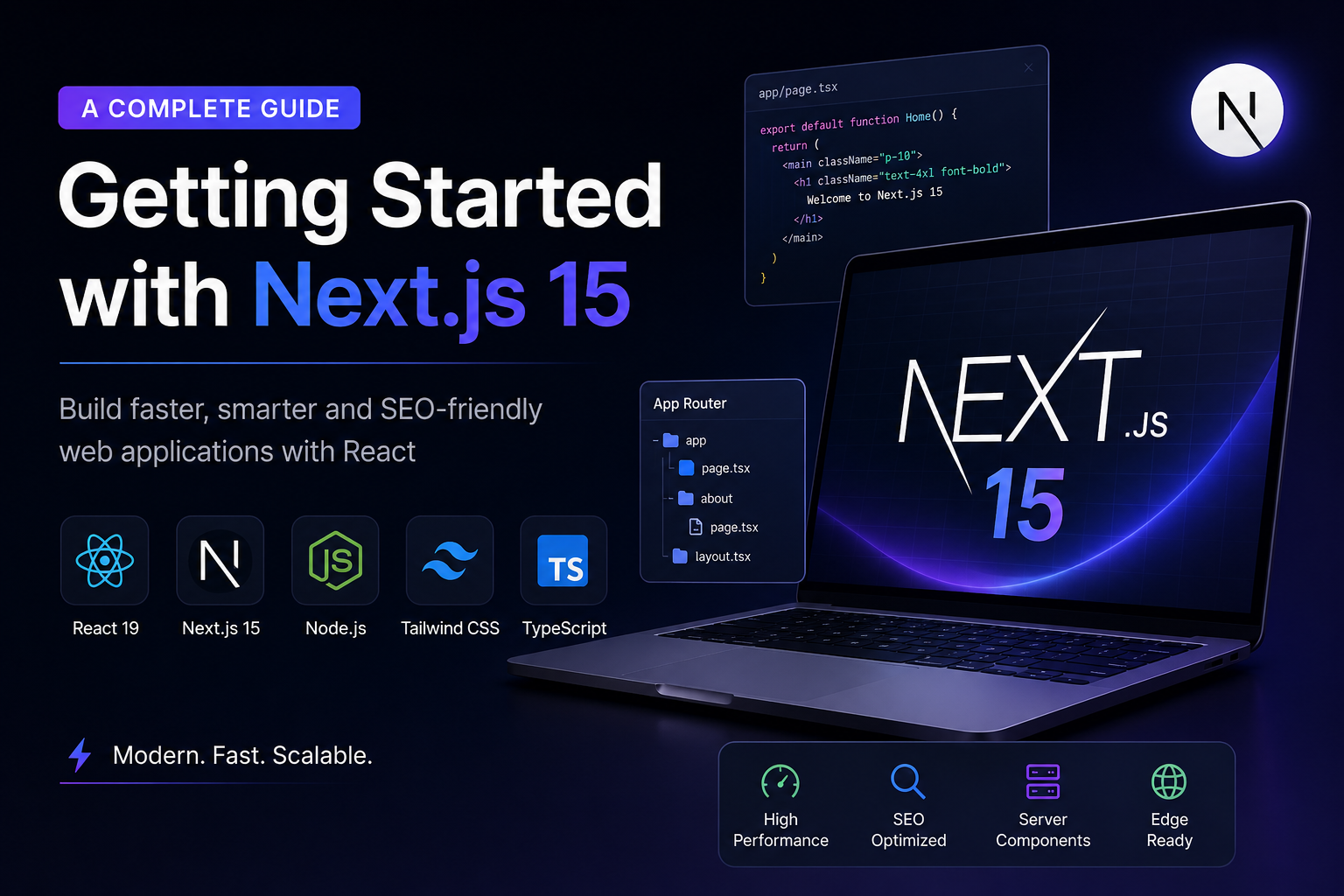
Next.js has become one of the most popular React frameworks for building modern web applications. With the release of Next.js 15, developers gain better performance, improved developer experience, enhanced caching, and more powerful server-side capabilities.
Why Choose Next.js?
Next.js provides everything needed to build production-ready applications including routing, API development, image optimization, metadata management, and excellent SEO support. Whether you're creating a company website, SaaS platform, eCommerce store, or enterprise dashboard, Next.js offers a scalable solution.
Key Features
- App Router
- Server Components
- Client Components
- Server Actions
- File-Based Routing
- Image Optimization
- SEO Metadata API
- Dynamic Routing
- Streaming UI
- Incremental Static Regeneration (ISR)
- Middleware Support
- Edge Runtime
Technology Stack
A modern Next.js project often includes the following technologies:
- Next.js 15
- React 19
- TypeScript
- Tailwind CSS
- Prisma ORM
- PostgreSQL
- NextAuth.js
- Zod Validation
- React Hook Form
- Vercel Deployment
Performance Benefits
Next.js automatically optimizes images, JavaScript bundles, CSS, and rendering strategies. Combined with Server Components and streaming, applications load significantly faster than traditional React applications.
SEO Advantages
Search engine optimization is built into the framework. Developers can easily configure metadata, Open Graph tags, canonical URLs, structured data, and sitemap generation, making websites highly discoverable.
Best Practices
- Use Server Components whenever possible.
- Keep Client Components lightweight.
- Implement proper caching strategies.
- Optimize images using the Next Image component.
- Use TypeScript for maintainability.
- Validate forms with Zod.
- Follow accessibility guidelines.
- Deploy on Vercel for maximum performance.
Conclusion
Next.js 15 is one of the best choices for modern web development. Its powerful rendering capabilities, built-in SEO, exceptional performance, and excellent developer experience make it ideal for projects of any size. Whether you're building a personal portfolio or an enterprise SaaS platform, Next.js provides the tools needed for long-term success.